
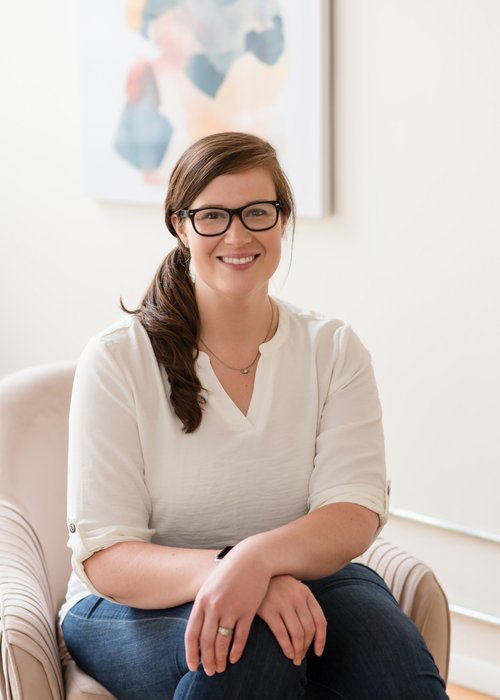
Melissa Bachelder, LCSW, PMH-C (she/her)
Focuses:
Perinatal Anxiety & Depression
Pregnancy Loss
Grief/ Loss
Chronic Illness
High-Risk Pregnancies
Perfectionism in Motherhood
Transitioning to Motherhood
Life Transitions/ Stressors
Birth Trauma
Neurodivergent Affirming
States: Illinois
ABOUT ME
I am a Licensed Clinical Social Worker with a certification in Perinatal Mental Health. I provide psychotherapy services addressing women’s mental health concerns utilizing a neuroaffirming lens. While I have over a decade of experience helping many clients with a variety of issues, my passion lies in the intersection of neurodivergence, motherhood, and perinatal mental health.
My approach is warm, collaborative, trauma-informed, and neuroaffirming. Rather than focusing on changing who you are to fit a world that may not always accommodate you, I believe therapy can be a better place to understand yourself, identify your needs, honor your neurodivergent traits, and develop strategies that work with your brain rather than against it.
I am very committed to my work as a therapist and passionate about helping my clients. I take a client-centered and strengths-based approach to therapy. I strive to empathize, but also to push my clients to grow and heal when appropriate. Together, we can explore your individual strengths, challenges, patterns, sensory and emotional needs, relationships, boundaries, and the ways you have learned to cope throughout your life. My goal is to help you move away from shame and self-criticism and toward greater self-understanding, self-compassion, and authenticity. I would love to come alongside you during your journey.
THERAPEUTIC FOCUS: PERINATAL MOOD & ANXIETY DISORDERS & THE INTERSECTION OF NEURODIVERGENCE, MOTHERHOOD, & PERINATAL MENTAL HEALTH
I specialize in working with perinatal depression and anxiety disorders, helping women adjust throughout their transition into motherhood. I understand and empathize with how difficult this transition can be. My professional and real-life experience allows me to sit in this space with my clients while also aiding them to make changes and meet goals.
Additionally, I have a special interest in the intersection of neurodivergence, motherhood, & perinatal mental health. I have a particular interest in working with high masking women who may have become exceptionally skilled at appearing capable while privately struggling with overwhelm, executive functioning, sensory sensitivities, emotional regulation, perfectionism, people-pleasing, or burnout. Pregnancy, childbirth, and becoming a parent can bring enormous changes in identity, routines, relationships, sensory experiences, expectations, and daily demands. For neurodivergent women, these transitions can sometimes highlight challenges that were previously manageable through established routines, coping strategies, or masking. Motherhood can make masking much more difficult. The demands of constant caregiving, sensory input, disrupted routines, sleep deprivation, executive functioning demands, and the pressure to meet societal expectations of motherhood can leave neurodivergent women feeling overwhelmed, depleted, or disconnected from themselves.
For women who discover their ADHD or autism later in life—particularly during pregnancy or after becoming a mother—there can be an additional layer of processing. You may be trying to understand yourself while simultaneously navigating a major life transition.
My background and experience in perinatal mental health allow me to support women at this intersection. We can explore how neurodivergence, motherhood, identity, relationships, mental health, and nervous system regulation interact, while also addressing concerns such as anxiety, depression, burnout, overwhelm, and adjustment to motherhood.
Therapy can provide space to reexamine past experiences, relationships, work, education, or mental health diagnoses with a neurodivergent lens and develop a more compassionate understanding of yourself. I want to help you understand yourself, work with your unique brain and nervous system, and build a life that feels more sustainable and authentic. I understand that asking for help is not easy; thank you for taking these first steps with me.